
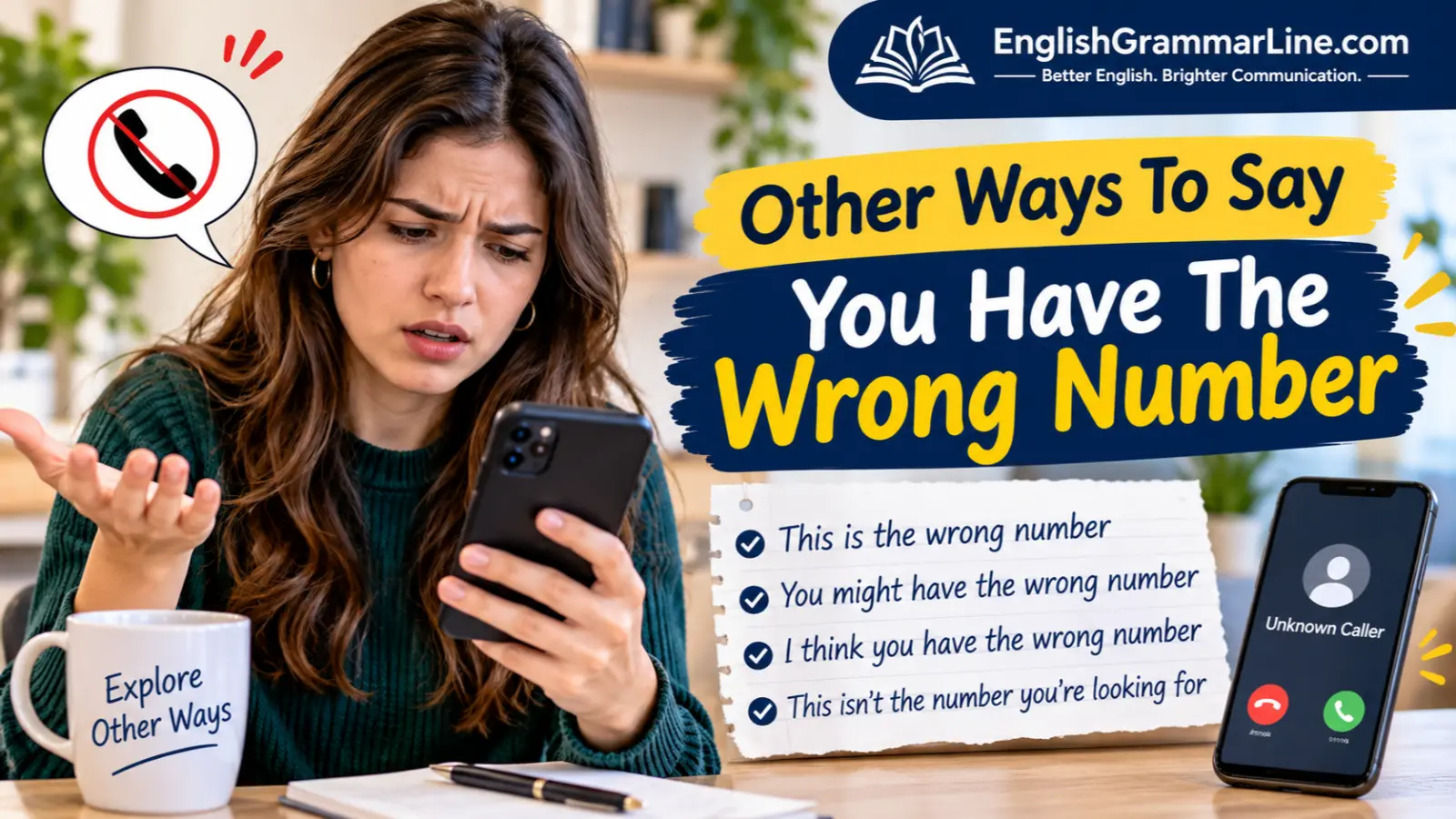
Receiving a phone call meant for someone else can happen to anyone. In this situation, saying You have the wrong number is a simple way to let the caller know they have reached the wrong person. However, the words you choose can affect how polite, friendly, or professional you sound. Learning other ways to say you have the wrong number helps you handle these calls with confidence.
You might be speaking with a stranger, a customer, a business contact, or someone who has made an honest mistake. For example, You’ve reached the wrong person sounds polite, while Wrong number! sounds more direct and casual. In this guide, you’ll discover natural expressions for phone calls, text messages, business conversations, and everyday situations.
What Does You Have the Wrong Number Mean?
You have the wrong number is an expression used when someone calls or sends a message to a phone number that does not belong to the person they want to contact.
It tells the caller that they have reached the wrong person.
The phrase is made up of:
- You: The person making the call.
- Have: A verb showing possession or a current situation.
- The wrong number: A phone number that does not connect to the intended person.
The expression is a complete sentence. It is usually neutral, but its tone can change depending on how you say it.
Examples:
- Sorry, you have the wrong number. I’m not David.
- I think you have the wrong number. I don’t know anyone named Sarah.
Common synonyms and related expressions:
- You’ve reached the wrong person.
- This isn’t the number you’re looking for.
- I think you dialed the wrong number.
- You may have called the wrong person.
- This number belongs to someone else.
The opposite idea would be telling someone they have reached the correct person or that they have the right number.
When to Use You Have the Wrong Number
Spoken English
This phrase is most common during phone conversations. You can use it when a stranger calls and asks for someone you do not know.
For example:
Caller: Hello, may I speak with John?
You: Sorry, I think you have the wrong number.
It is a simple and polite way to end the confusion.
Business English
In business communication, it is better to use a professional and respectful expression. You may receive calls from customers, suppliers, or business contacts who have dialed an incorrect number.
For example:
I’m afraid you’ve reached the wrong department.
This sounds more professional than simply saying Wrong number!
Emails and Messages
People sometimes send text messages to the wrong number. In this situation, you can politely explain that they have contacted the wrong person.
For example:
Hi, I think you have the wrong number. I’m not the person you’re trying to reach.
Keep your response short and clear.
Social Media
The phrase is also useful when someone sends you a direct message or contacts you through a messaging app by mistake.
For example:
Hey, I think you’ve got the wrong person. I don’t know who you’re looking for.
A friendly tone can prevent an uncomfortable conversation.
Academic Writing
This expression is not common in academic writing because it belongs to everyday communication.
However, you may use more formal alternatives when writing about communication errors.
For example:
The caller contacted an incorrect telephone number.
This sounds more suitable for reports or formal explanations.
Professional Meetings
Sometimes, people join conference calls or online meetings by mistake. You can politely explain that they have reached the wrong meeting or contact.
For example:
I’m sorry, but I believe you’ve joined the wrong meeting.
If someone calls the wrong office, you can say:
I’m afraid this is not the correct department.
Is You Have the Wrong Number Polite or Professional?
You have the wrong number is generally neutral. It is not rude, but it can sound slightly direct depending on your tone.
Here is how different expressions compare:
- Polite: I’m sorry, but I think you’ve reached the wrong number.
- Neutral: You have the wrong number.
- Strong: You’ve called the wrong number.
- Soft: I think there may have been a mistake.
- Formal: I’m afraid you’ve contacted the incorrect number.
- Informal: Wrong number, sorry!
Better for workplace: I’m afraid you’ve reached the wrong person.
Better for friends: I think you’ve got the wrong number.
Avoid in professional communication: Wrong number! Stop calling!
The last example sounds aggressive and may create an unnecessary conflict.
Pros & Cons of Using You Have the Wrong Number
✔ Pros
- Easy to understand.
- Clearly explains the problem.
- Works in phone conversations.
- Suitable for most everyday situations.
- Helps end an unwanted conversation politely.
- Does not require a long explanation.
- Can be used with strangers and familiar people.
✘ Cons
- May sound too direct in formal situations.
- Can feel unfriendly without a polite tone.
- Does not always explain whether the caller has reached the wrong person or department.
- Repeating the same expression can sound boring.
- May not be enough when someone continues calling.
Quick Alternatives to You Have the Wrong Number
Here are some short and natural alternatives you can use right away:
- You’ve reached the wrong person.
- I think you dialed the wrong number.
- This isn’t the right number.
- Sorry, wrong number.
- You’ve got the wrong number.
- I’m not the person you’re looking for.
- I believe you’ve called the wrong person.
- This number doesn’t belong to them.
- I think there’s been a mistake.
- You’ve reached someone else.
- This isn’t who you’re trying to reach.
- I’m afraid you’ve got the wrong number.
- You may have the wrong contact.
- This is not the number you need.
- I don’t think you’re calling the right person.
- You’ve contacted the wrong number.
- I’m not sure who you’re trying to reach.
- I believe you’ve made a dialing mistake.
- This number belongs to someone else.
- You might want to check the number again.
You’ve Reached the Wrong Person
Phrase: You’ve reached the wrong person.
Meaning: The person answering the call is not the person the caller wants to speak with.
Explanation: This is one of the most natural and polite alternatives to you have the wrong number. It focuses on the person rather than the phone number. It is useful when someone asks for a particular individual.
Grammar Note: Present perfect verb phrase.
Example Sentence: I’m sorry, but you’ve reached the wrong person. I’m not Mr. Brown.
Best Use: Phone calls, workplace conversations, professional communication, everyday English.
Worst Use: When the actual problem is a wrong department or office rather than an individual.
Tone: Polite, neutral, professional.
Level: Beginner.
Similarity Score: 10/10.
Replaceability Tip: Choose this phrase when you want to sound polite while making it clear that the caller has not reached the intended person.
I Think You Dialed the Wrong Number
Phrase: I think you dialed the wrong number.
Meaning: The caller probably entered or selected an incorrect phone number.
Explanation: This expression is clear and natural. Starting with I think makes the message sound softer and less accusatory. It is especially useful when you want to avoid embarrassing the caller.
Grammar Note: Simple past verb phrase.
Example Sentence: I think you dialed the wrong number because I don’t know anyone named Michael.
Best Use: Phone calls, everyday conversations, informal communication.
Worst Use: Situations where you are certain the person has contacted the wrong department rather than dialed an incorrect number.
Tone: Friendly, neutral, polite.
Level: Beginner.
Similarity Score: 10/10.
Replaceability Tip: Use this when you want to explain the mistake without making the caller feel uncomfortable.
This Isn’t the Right Number
Phrase: This isn’t the right number.
Meaning: The phone number the caller has contacted is not the one they need.
Explanation: This is a short and direct expression. It is easy to understand and works well in both spoken and written English. It does not sound overly formal or overly casual.
Grammar Note: Negative sentence with the verb to be.
Example Sentence: Sorry, this isn’t the right number for the doctor’s office.
Best Use: Phone calls, text messages, customer communication.
Worst Use: Situations where the caller has reached the correct number but is asking for the wrong person.
Tone: Neutral, polite, direct.
Level: Beginner.
Similarity Score: 10/10.
Replaceability Tip: Choose this when the incorrect phone number is the main issue.
I’m Not the Person You’re Looking For
Phrase: I’m not the person you’re looking for.
Meaning: You are not the individual the caller wants to contact.
Explanation: This expression is clear and respectful. It focuses on your identity rather than blaming the caller for making a mistake. It is especially useful when you do not recognize the name they mention.
Grammar Note: Negative sentence with a relative clause.
Example Sentence: I’m sorry, but I’m not the person you’re looking for.
Best Use: Phone calls, messages, professional conversations, everyday English.
Worst Use: When you simply need to correct an incorrect phone number without explaining anything else.
Tone: Polite, friendly, neutral.
Level: Beginner.
Similarity Score: 9/10.
Replaceability Tip: Use it when someone asks for a specific person and you want to correct them politely.
You’ve Got the Wrong Number
Phrase: You’ve got the wrong number.
Meaning: You have contacted an incorrect phone number.
Explanation: This is a common conversational version of the original phrase. It sounds natural and relaxed. It is especially useful in everyday phone conversations.
Grammar Note: Present perfect construction using got.
Example Sentence: Sorry, you’ve got the wrong number. I’m not Kevin.
Best Use: Informal phone calls, casual conversations, text messages.
Worst Use: Highly formal business letters or official reports.
Tone: Friendly, neutral, conversational.
Level: Beginner.
Similarity Score: 10/10.
Replaceability Tip: Choose this when you want to sound more conversational without changing the original meaning.
I Believe You’ve Called the Wrong Person
Phrase: I believe you’ve called the wrong person.
Meaning: You think the caller has reached someone other than the person they intended to contact.
Explanation: This phrase sounds more formal and careful. Using I believe softens the statement and makes it suitable for professional situations.
Grammar Note: Present perfect verb phrase.
Example Sentence: I believe you’ve called the wrong person. I’m not associated with that company.
Best Use: Business calls, professional communication, formal conversations.
Worst Use: Casual conversations with close friends, where it may sound unnecessarily serious.
Tone: Formal, polite, professional.
Level: Intermediate.
Similarity Score: 9/10.
Replaceability Tip: Use this when speaking with customers, clients, or unfamiliar business contacts.
I’m Afraid You’ve Got the Wrong Number
Phrase: I’m afraid you’ve got the wrong number.
Meaning: A polite way to tell someone they have called an incorrect number.
Explanation: In this expression, I’m afraid does not mean you are frightened. It is a polite phrase used to introduce disappointing or corrective information. It makes the message sound softer.
Grammar Note: Polite idiomatic expression.
Example Sentence: I’m afraid you’ve got the wrong number. This is a personal mobile phone.
Best Use: Formal phone calls, customer service, professional communication.
Worst Use: Urgent situations where a very direct answer is needed.
Tone: Soft, polite, professional.
Level: Intermediate.
Similarity Score: 10/10.
Replaceability Tip: Choose this when you want to correct someone without sounding rude.
I Think There’s Been a Mistake
Phrase: I think there’s been a mistake.
Meaning: Something has gone wrong, and the caller may have contacted the wrong person.
Explanation: This is a gentle way to point out a possible error. It avoids directly blaming the caller and gives them room to check their information.
Grammar Note: Present perfect passive construction.
Example Sentence: I think there’s been a mistake. I wasn’t expecting a call about this appointment.
Best Use: Professional calls, customer service, emails, polite conversations.
Worst Use: When you need to give a clear and immediate correction about the number.
Tone: Soft, diplomatic, professional.
Level: Intermediate.
Similarity Score: 8/10.
Replaceability Tip: Use this when you want to be tactful or are not completely sure what happened.
You’ve Reached Someone Else
Phrase: You’ve reached someone else.
Meaning: Your call has connected to a person other than the one you intended to contact.
Explanation: This expression is straightforward and natural. It tells the caller that the person answering is not the person they are trying to reach.
Grammar Note: Present perfect verb phrase.
Example Sentence: You’ve reached someone else. I’m not the owner of that business.
Best Use: Phone calls, text messages, casual and professional conversations.
Worst Use: When the caller needs to know that the phone number itself is incorrect.
Tone: Neutral, polite, clear.
Level: Beginner.
Similarity Score: 9/10.
Replaceability Tip: Choose this when you want to explain that the caller has connected with the wrong individual.
This Number Doesn’t Belong to Them
Phrase: This number doesn’t belong to them.
Meaning: The phone number does not belong to the person the caller wants.
Explanation: This phrase is useful when the caller asks for someone who used to own the number or whose contact details may have changed.
Grammar Note: Negative present simple sentence.
Example Sentence: I’m sorry, but this number doesn’t belong to Robert anymore.
Best Use: Phone calls, text messages, customer communication.
Worst Use: When the caller simply misdialed and no ownership issue exists.
Tone: Neutral, explanatory, polite.
Level: Intermediate.
Similarity Score: 8/10.
Replaceability Tip: Use this when the person they are looking for no longer uses your phone number.
I Don’t Think You’re Calling the Right Person
Phrase: I don’t think you’re calling the right person.
Meaning: You believe the caller has contacted someone who cannot help with their request.
Explanation: This expression is polite and conversational. It is especially helpful when the caller may have confused you with another person.
Grammar Note: Present continuous verb phrase.
Example Sentence: I don’t think you’re calling the right person. I work in a different department.
Best Use: Workplace, business calls, everyday conversations.
Worst Use: When you need to clearly tell someone that the number itself is wrong.
Tone: Soft, neutral, polite.
Level: Intermediate.
Similarity Score: 9/10.
Replaceability Tip: Choose this when the caller has mistaken you for someone else.
Sorry, Wrong Number
Phrase: Sorry, wrong number.
Meaning: A short way to tell someone they have contacted an incorrect number.
Explanation: This is one of the quickest ways to handle a mistaken call or message. It is widely understood and does not require much explanation. Adding sorry makes it a little friendlier.
Grammar Note: Elliptical expression; a shortened sentence with omitted words.
Example Sentence: Sorry, wrong number. I don’t know anyone named James.
Best Use: Casual phone calls, text messages, messaging apps.
Worst Use: Formal business conversations or sensitive situations requiring more explanation.
Tone: Informal, direct, friendly.
Level: Beginner.
Similarity Score: 10/10.
Replaceability Tip: Use this when you want to correct a simple mistake quickly.
I’m Not Sure Who You’re Trying to Reach
Phrase: I’m not sure who you’re trying to reach.
Meaning: You do not know which person the caller wants to contact.
Explanation: This expression sounds polite and helpful. It is especially useful when someone mentions a name you do not recognize. It can also encourage the caller to explain whom they are looking for.
Grammar Note: Present simple with a subordinate clause.
Example Sentence: I’m not sure who you’re trying to reach, but this isn’t John’s number.
Best Use: Professional calls, customer service, everyday communication.
Worst Use: When you already know the caller has dialed the wrong number and need to end the conversation quickly.
Tone: Friendly, polite, neutral.
Level: Intermediate.
Similarity Score: 8/10.
Replaceability Tip: Choose this when you want to sound helpful instead of simply correcting the caller.
I Believe You’ve Made a Dialing Mistake
Phrase: I believe you’ve made a dialing mistake.
Meaning: You think the caller entered or selected an incorrect phone number.
Explanation: This is a more formal way to explain that someone has called the wrong number. It is clear, respectful, and suitable for professional conversations.
Grammar Note: Present perfect construction.
Example Sentence: I believe you’ve made a dialing mistake. This is not the number for the hotel.
Best Use: Formal phone calls, business communication, professional situations.
Worst Use: Casual conversations where a simpler expression would sound more natural.
Tone: Formal, neutral, professional.
Level: Advanced.
Similarity Score: 9/10.
Replaceability Tip: Use this when you want a more formal way to identify a calling error.
This Isn’t Who You’re Trying to Reach
Phrase: This isn’t who you’re trying to reach.
Meaning: The person answering the phone is not the person the caller wants.
Explanation: This is a clear and natural expression. It is slightly more conversational than I’m not the person you’re looking for.
Grammar Note: Negative sentence with a noun clause.
Example Sentence: This isn’t who you’re trying to reach. I think you need to contact Mr. Wilson.
Best Use: Phone calls, messages, casual professional communication.
Worst Use: Formal written reports.
Tone: Neutral, friendly, direct.
Level: Intermediate.
Similarity Score: 9/10.
Replaceability Tip: Choose this when you want to explain the situation in simple, natural English.
You’ve Contacted the Wrong Number
Phrase: You’ve contacted the wrong number.
Meaning: You have reached a phone number that is not the one you intended to contact.
Explanation: This phrase is more formal than Wrong number! It works well in written communication and professional messages.
Grammar Note: Present perfect verb phrase.
Example Sentence: It appears you’ve contacted the wrong number. Our office does not handle those requests.
Best Use: Business communication, emails, formal messages.
Worst Use: Friendly conversations where it may sound stiff.
Tone: Formal, professional, neutral.
Level: Intermediate.
Similarity Score: 10/10.
Replaceability Tip: Use it when you need a professional way to explain a contact error.
I Don’t Recognize That Name
Phrase: I don’t recognize that name.
Meaning: You do not know the person the caller is asking for.
Explanation: This expression is useful when someone asks to speak with a person whose name is unfamiliar. It does not directly say the caller has the wrong number, but it helps explain why you cannot connect them.
Grammar Note: Negative present simple sentence.
Example Sentence: I don’t recognize that name. Are you sure you have the correct number?
Best Use: Phone calls, customer communication, everyday English.
Worst Use: When you want to clearly confirm that the caller has reached the wrong person.
Tone: Neutral, polite, curious.
Level: Beginner.
Similarity Score: 7/10.
Replaceability Tip: Choose this when you are unsure whether the caller has made a mistake.
You Might Want to Check the Number Again
Phrase: You might want to check the number again.
Meaning: The caller should review the phone number they dialed.
Explanation: This expression is gentle and helpful. It suggests that the caller may have entered an incorrect number without directly accusing them of making a mistake.
Grammar Note: Modal verb phrase.
Example Sentence: You might want to check the number again because I don’t think this is the correct contact.
Best Use: Phone calls, text messages, customer service, professional conversations.
Worst Use: When someone repeatedly calls despite being told they have the wrong number.
Tone: Helpful, soft, polite.
Level: Intermediate.
Similarity Score: 9/10.
Replaceability Tip: Use this when you want the caller to double-check their information.
This Is Not the Number You’re Looking For
Phrase: This is not the number you’re looking for.
Meaning: The phone number does not belong to the person or organization the caller wants.
Explanation: This phrase is clear and polite. It directly addresses the problem without sounding aggressive. It is useful in both phone conversations and written messages.
Grammar Note: Negative sentence with a relative clause.
Example Sentence: I’m sorry, but this is not the number you’re looking for.
Best Use: Phone calls, messages, business communication.
Worst Use: Situations where the number is correct but the caller has asked for the wrong person.
Tone: Neutral, polite, professional.
Level: Intermediate.
Similarity Score: 10/10.
Replaceability Tip: Choose this when you want to make the mistake clear without adding unnecessary details.
I’m Not Associated With That Person
Phrase: I’m not associated with that person.
Meaning: You have no connection with the person the caller wants to contact.
Explanation: This expression is more formal and can be useful when someone assumes you know or work with a particular person. It does not always mean the number is wrong, so use it when the relationship is the main issue.
Grammar Note: Negative present simple sentence.
Example Sentence: I’m sorry, but I’m not associated with that person or their business.
Best Use: Professional calls, business communication, formal situations.
Worst Use: Casual conversations where it may sound distant.
Tone: Formal, neutral, professional.
Level: Advanced.
Similarity Score: 7/10.
Replaceability Tip: Use this when you want to clarify that you have no connection with the person being requested.
I Think You’ve Reached the Wrong Department
Phrase: I think you’ve reached the wrong department.
Meaning: The caller has contacted a department that cannot help with their request.
Explanation: This is especially useful in offices and large organizations. It does not suggest that the phone number is incorrect. Instead, it explains that the caller needs another department.
Grammar Note: Present perfect verb phrase.
Example Sentence: I think you’ve reached the wrong department. You need to speak with customer support.
Best Use: Business calls, offices, customer service.
Worst Use: Personal phone calls where no departments are involved.
Tone: Professional, polite, helpful.
Level: Intermediate.
Similarity Score: 8/10.
Replaceability Tip: Choose this when someone has reached your organization but needs a different department.
I Believe You Have the Incorrect Contact Details
Phrase: I believe you have the incorrect contact details.
Meaning: The caller or sender has information that does not lead to the intended person.
Explanation: This is a formal alternative that works well in professional communication. It may refer to an incorrect phone number, email address, or other contact information.
Grammar Note: Formal present simple sentence.
Example Sentence: I believe you have the incorrect contact details for our sales department.
Best Use: Business emails, professional messages, customer service.
Worst Use: Casual phone conversations where simple words are easier to understand.
Tone: Formal, professional, diplomatic.
Level: Advanced.
Similarity Score: 8/10.
Replaceability Tip: Use this when the mistake may involve more than just a phone number.
You’ve Called the Wrong Line
Phrase: You’ve called the wrong line.
Meaning: You have reached a different telephone line from the one you intended to call.
Explanation: This expression is useful in organizations with several telephone lines. It can help redirect callers to the correct service or office.
Grammar Note: Present perfect verb phrase.
Example Sentence: You’ve called the wrong line. Please contact our reservations department instead.
Best Use: Business phone systems, offices, customer support.
Worst Use: Personal calls where the issue is simply an incorrect contact.
Tone: Neutral, professional, direct.
Level: Intermediate.
Similarity Score: 8/10.
Replaceability Tip: Choose this when the caller has reached the wrong telephone line within an organization.
You Have the Wrong Contact
Phrase: You have the wrong contact.
Meaning: The person or contact information you have is not the correct one.
Explanation: This expression is useful in modern communication. It can refer to a phone contact, saved number, or messaging account. It is slightly broader than the original phrase.
Grammar Note: Simple present sentence.
Example Sentence: I think you have the wrong contact. I’m not the person who handles those orders.
Best Use: Text messages, workplace communication, everyday English.
Worst Use: Formal reports that require precise details.
Tone: Neutral, friendly, direct.
Level: Beginner.
Similarity Score: 8/10.
Replaceability Tip: Use this when the caller or sender may have selected the wrong saved contact.
I Think You Have the Wrong Extension
Phrase: I think you have the wrong extension.
Meaning: The caller has dialed an incorrect internal phone extension.
Explanation: This expression is common in offices and organizations. A phone extension is an additional number used to reach a specific person or department within a telephone system.
Grammar Note: Present simple sentence.
Example Sentence: I think you have the wrong extension. You need to dial 204 for the accounts team.
Best Use: Office calls, corporate phone systems, workplace communication.
Worst Use: Personal mobile calls without extensions.
Tone: Professional, neutral, helpful.
Level: Intermediate.
Similarity Score: 8/10.
Replaceability Tip: Choose this when the caller has reached the wrong internal office number.
I Don’t Think This Call Was Meant for Me
Phrase: I don’t think this call was meant for me.
Meaning: You believe the caller intended to speak with someone else.
Explanation: This is a gentle and natural way to explain a mistaken call. It focuses on the situation rather than blaming the caller.
Grammar Note: Negative sentence with a passive construction.
Example Sentence: I don’t think this call was meant for me. Were you trying to reach someone named Daniel?
Best Use: Phone conversations, professional communication, everyday English.
Worst Use: Situations where a direct correction is necessary.
Tone: Soft, friendly, polite.
Level: Intermediate.
Similarity Score: 9/10.
Replaceability Tip: Use this when you want to sound especially considerate.
I’m Sorry, but I Don’t Know That Person
Phrase: I’m sorry, but I don’t know that person.
Meaning: You are unfamiliar with the individual the caller is asking for.
Explanation: This expression is polite and easy to understand. It works well when someone asks for a person you have never met or heard of.
Grammar Note: Negative present simple sentence.
Example Sentence: I’m sorry, but I don’t know that person. I think you may have the wrong number.
Best Use: Phone calls, messages, everyday conversations.
Worst Use: Professional situations where you need to provide more specific contact information.
Tone: Friendly, polite, neutral.
Level: Beginner.
Similarity Score: 8/10.
Replaceability Tip: Choose this when you want to explain that the person being requested is unfamiliar to you.
This Number Has Been Reassigned
Phrase: This number has been reassigned.
Meaning: The phone number has been given to a new owner.
Explanation: This phrase is useful when callers continue asking for someone who previously used your number. It gives a clear explanation of why they have reached someone else.
Grammar Note: Present perfect passive sentence.
Example Sentence: This number has been reassigned, and I am not the previous owner.
Best Use: Repeated wrong-number calls, formal explanations, text messages.
Worst Use: When the caller has simply made a one-time dialing mistake.
Tone: Neutral, informative, professional.
Level: Advanced.
Similarity Score: 7/10.
Replaceability Tip: Use this when you have received repeated calls intended for the previous owner of your number.
Please Double-Check the Number
Phrase: Please double-check the number.
Meaning: Kindly review the phone number to make sure it is correct.
Explanation: This expression is polite and practical. It gives the caller a simple action to fix the problem. It is also useful in text messages when someone has contacted you by mistake.
Grammar Note: Imperative sentence with a polite marker.
Example Sentence: I don’t think this is the correct number. Please double-check the number you dialed.
Best Use: Phone calls, text messages, professional communication.
Worst Use: When the caller has already checked the number several times.
Tone: Polite, helpful, direct.
Level: Beginner.
Similarity Score: 9/10.
Replaceability Tip: Choose this when you want to suggest a simple solution rather than just point out the mistake.
You’ve Reached the Wrong Office
Phrase: You’ve reached the wrong office.
Meaning: The caller has contacted an office that is not the one they need.
Explanation: This expression works well in companies, schools, hospitals, and other organizations. It politely explains that the caller needs another location or office.
Grammar Note: Present perfect verb phrase.
Example Sentence: You’ve reached the wrong office. Our main branch handles those requests.
Best Use: Business calls, official communication, workplace conversations.
Worst Use: Personal calls to individual mobile numbers.
Tone: Professional, neutral, helpful.
Level: Intermediate.
Similarity Score: 8/10.
Replaceability Tip: Use this when the caller has contacted the wrong physical or organizational office.
I Think You’ve Got the Wrong End of the Stick
Phrase: I think you’ve got the wrong end of the stick.
Meaning: You have misunderstood something.
Explanation: This is a British English idiom. It does not directly mean that someone has dialed an incorrect phone number. Instead, it means that someone has misunderstood a situation or received the wrong idea. It is included as a related expression, not a direct replacement.
Grammar Note: Idiom.
Example Sentence: I think you’ve got the wrong end of the stick. I’m not the person who made that appointment.
Best Use: Informal British English, conversations involving misunderstandings.
Worst Use: Direct wrong-number calls where the caller simply dialed incorrectly.
Tone: Conversational, informal, sometimes humorous.
Level: Advanced.
Similarity Score: 3/10.
Replaceability Tip: Use this only when the problem is a misunderstanding rather than an incorrect phone number.
Mini Dialogue Examples
Formal Phone Conversation
Caller: Good morning. May I speak with Mr. Anderson?
You: Good morning. I’m sorry, but I believe you’ve reached the wrong person.
Caller: Oh, I apologize. I must have dialed the wrong number.
You: No problem. Have a nice day.
Informal Phone Conversation
Caller: Hey, is this Mike?
You: No, sorry. You’ve got the wrong number.
Caller: Oh, my mistake!
You: That’s okay. Take care!
Business Email-Style Example
Subject: Incorrect Contact Number
Dear Sir or Madam,
Thank you for reaching out. I’m afraid you’ve contacted the wrong number. I am not the person responsible for the account you mentioned.
You may wish to check the contact details and try again.
Thank you for your understanding.
Best regards,
Alex
Mistakes to Avoid
English learners sometimes make small mistakes when telling someone they have contacted the wrong person. Here are some common errors to avoid.
– Saying Wrong Number! too aggressively: This may sound rude. Add sorry or I think to make it friendlier.
– Confusing the wrong person with the wrong number: Someone may have the correct number but ask for the wrong person. Choose your words carefully.
– Using overly formal language with friends: Expressions such as I believe you’ve contacted the incorrect individual sound unnatural in casual conversations.
– Giving unnecessary personal information: You do not need to explain who you are, where you live, or why the number is yours.
– Using incorrect verb forms: Say You’ve reached the wrong person, not You reached to the wrong person.
– Sounding angry when correcting a stranger: Most wrong-number calls are honest mistakes. A calm response is usually enough.
– Continuing a conversation with suspicious callers: If someone keeps asking personal questions or makes you uncomfortable, end the call instead of sharing information.
Cultural & Tone Tips
The way people respond to wrong-number calls can vary across cultures and social situations. Some people prefer a short answer, while others use polite expressions to avoid making the caller feel embarrassed.
UK English
In British English, people often use soft expressions such as:
- I’m afraid you’ve got the wrong number.
- Sorry, I think you’ve dialed the wrong number.
- You’ve reached the wrong person, I’m afraid.
The expression I’m afraid is a common way to make a correction sound more polite.
US English
In American English, people often prefer direct and simple expressions.
Common examples include:
- You’ve got the wrong number.
- Sorry, wrong number.
- I think you dialed the wrong number.
- This isn’t the person you’re looking for.
These expressions sound natural in everyday phone conversations.
Casual Social English
In casual conversations, people usually avoid long explanations.
For example:
- Oops, wrong number!
- Sorry, you’ve got the wrong person.
- I think you meant to call someone else.
- Nope, this isn’t the right number.
These expressions are friendly and easy to understand.
A Helpful Etiquette Tip
Always consider your relationship with the caller.
With strangers, a simple Sorry, I think you’ve got the wrong number is usually enough.
With business contacts, use I’m afraid you’ve reached the wrong person.
If someone repeatedly calls you despite your correction, you do not have to continue the conversation. You can politely end the call or block the number if necessary.
Best Alternatives at a Glance
| Phrase | Tone | Best Context | Professional Level | Example |
|---|---|---|---|---|
| You’ve reached the wrong person | Polite | Phone calls | High | You’ve reached the wrong person. |
| I’m afraid you’ve got the wrong number | Soft | Business calls | High | I’m afraid you’ve got the wrong number. |
| I think you dialed the wrong number | Friendly | Everyday calls | Medium | I think you dialed the wrong number. |
| This isn’t the right number | Neutral | Text messages | Medium | Sorry, this isn’t the right number. |
| I’m not the person you’re looking for | Polite | Professional calls | High | I’m not the person you’re looking for. |
| Sorry, wrong number | Casual | Texts and calls | Low | Sorry, wrong number! |
| I believe you’ve contacted the wrong number | Formal | Business communication | Very high | I believe you’ve contacted the wrong number. |
FAQs
Is You Have the Wrong Number Rude?
No, you have the wrong number is not usually rude. It is a neutral expression used to correct a phone call or message. However, saying it angrily can make it sound unfriendly. Adding sorry or I think makes it more polite.
Is It Okay to Say You Have the Wrong Number in a Professional Call?
Yes. It is acceptable in professional conversations. However, I’m afraid you’ve reached the wrong person sounds more polished and respectful. It is a good choice when speaking with clients, customers, or business contacts.
What Is the Most Formal Alternative to You Have the Wrong Number?
I believe you’ve contacted the incorrect number is a formal alternative. You can also say I’m afraid you’ve reached the wrong person when speaking with someone in a professional setting.
What Is the Most Polite Way to Say You Have the Wrong Number?
I’m sorry, but I think you’ve reached the wrong person is a very polite option. It sounds friendly and respectful without making the caller feel embarrassed.
What Should Beginners Say Instead of You Have the Wrong Number?
Beginners can use simple expressions such as Sorry, wrong number, You’ve got the wrong number, and This isn’t the right number. These phrases are easy to learn and commonly used by native English speakers.
How Do You Politely Tell Someone They Texted the Wrong Number?
You can say Hi, I think you’ve got the wrong number. I’m not the person you’re trying to reach. This is a friendly and clear way to correct the mistake without sounding rude.
Conclusion
Learning other ways to say you have the wrong number helps you communicate more naturally in everyday and professional situations. While the original phrase is simple and useful, alternatives such as You’ve reached the wrong person, I’m afraid you’ve got the wrong number, and I think you dialed the wrong number give you more control over your tone.
Use friendly expressions with strangers, casual phrases with friends, and polite alternatives in business conversations. The key is to choose words that fit the situation. Practice these expressions in real conversations and messages to improve your English fluency and confidence.

I’m John Mark, the creator of EnglishGrammarline. I share simple and meaningful insights into dreams, their symbols, and possible interpretations. My goal is to help readers understand their dreams in an easy and interesting way.