
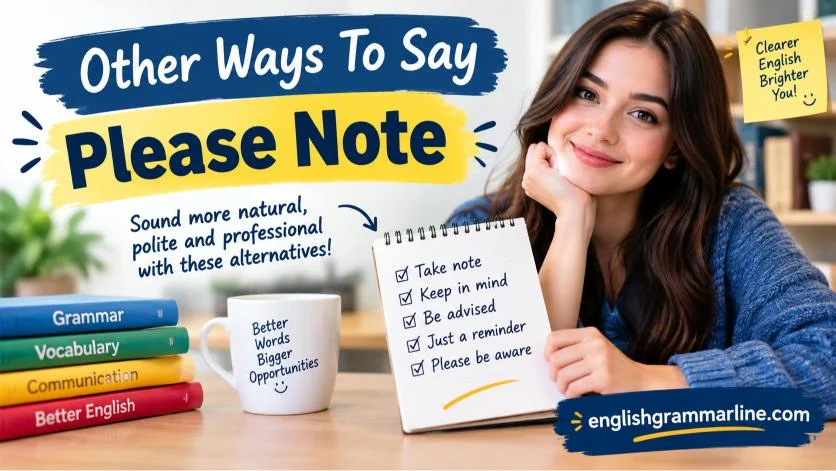
lease note is a common phrase used to draw attention to important information. It tells the reader or listener to pay attention to something that may be useful, important, or necessary. You often see it in emails, business messages, notices, instructions, websites, and official documents.
While please note is polite and professional, using the same phrase too often can make your writing feel repetitive. Learning other ways to say please note gives you more choices and helps you match your words to the situation.
Word choice can change the tone of a message. A formal phrase may work well in a business email, while a friendly expression may be better for a message to a friend. For example, Please note that the deadline has changed sounds formal, while Just a heads-up, the deadline has changed sounds more relaxed.
Knowing different alternatives to please note can make your English clearer, more natural, and more flexible in professional and everyday situations.
What Does Please Note Mean?
Please note means pay attention to this information or be aware of what follows.
It is normally used before an important fact, instruction, warning, reminder, or change. The word note is a verb here. It means to notice, observe, remember, or pay attention to something.
For example:
- Please note that the office will be closed on Friday.
- Please note the changes in the updated schedule.
The phrase is polite and usually neutral. It does not normally sound rude, but its tone can become more formal when it appears in official notices or business communication.
Common synonyms for please note include:
- Be aware
- Keep in mind
- Take note
- Remember
- Pay attention
- Please be aware
- Just a reminder
- Just so you know
- For your information
- Kindly note
Some expressions are softer and friendlier, while others are more formal and direct.
When to Use Please Note
Spoken English
In everyday speech, please note can be used when you want someone to pay attention to an important detail.
For example:
Please note that the store closes at six today.
However, native speakers often use more natural conversational phrases such as just so you know, keep in mind, or just a heads-up.
Business English
Please note is very common in professional communication. It works well when sharing important information with customers, employees, clients, or colleagues.
For example:
Please note that all invoices must be submitted by Friday.
It is useful because it draws attention to the information without sounding aggressive.
Emails and Messages
Business emails often use please note to introduce an important detail.
For example:
Please note that the meeting time has been changed to 3 p.m.
For friendly emails, just a reminder or just so you know may sound warmer.
Social Media
Please note is less common in casual social media posts. It can sound official or serious.
For example, a social media creator might say:
Just a heads-up: our opening hours have changed.
This sounds more natural than please note for a casual audience.
Academic Writing
The phrase can be useful in academic instructions, research notes, and formal documents.
For example:
Please note that the following examples are simplified for clarity.
In formal academic writing, however, it is often better to state the information directly rather than repeatedly telling the reader to note it.
Professional Meetings
During a meeting, please note can be useful when introducing a detail that participants should remember.
For example:
Please note that the final report is due next Monday.
In spoken meetings, keep in mind or I should point out can sometimes sound more natural.
Is Please Note Polite or Professional?
Please note is generally polite, neutral, and professional.
It is especially common in written English. The phrase does not normally sound rude because please makes the instruction softer.
Polite
Please note that the office will close early today.
This sounds respectful and clear.
Neutral
Please note the change in the schedule.
This gives information without adding much emotion.
Strong
Please note that this requirement is mandatory.
Here, the information itself creates a stronger tone.
Soft
Just so you know, the schedule has changed.
This sounds more relaxed and friendly.
Formal
Kindly note that all applications must be submitted by Friday.
This can sound more official than ordinary conversation.
Informal
Just a heads-up, the meeting starts earlier tomorrow.
This is much more natural for casual communication.
Better for workplace: Please note that the deadline has been moved.
Better for casual messages: Just a heads-up, the deadline has changed.
A useful etiquette tip is to avoid making every sentence sound like an official notice. Use please note when the information genuinely deserves attention.
Pros & Cons of Using Please Note
✔ Pros
- Clear and easy to understand
- Polite and professional
- Useful in business emails
- Good for important announcements
- Works well in formal notices
- Helps highlight important information
- Suitable for workplace communication
- Easy for English learners to use
✘ Cons
- Can sound formal in casual conversations
- May feel repetitive when overused
- Can sound like an instruction
- May feel impersonal in friendly messages
- Sometimes unnecessary when the information is already obvious
- Can make casual writing sound too official
Quick Alternatives to Please Note
- Please be aware
- Kindly note
- Take note
- Keep in mind
- Be aware
- Please remember
- Just a reminder
- Just so you know
- Just a heads-up
- For your information
- For your reference
- I should point out
- It is worth noting
- Bear in mind
- Remember that
- Pay attention to
- Please keep in mind
- I wanted to mention
- I would like to highlight
- Please be advised
Please Be Aware
Phrase: Please be aware
Meaning: Pay attention to or understand an important fact.
Explanation: Please be aware is one of the closest alternatives to please note. It is polite and professional, and it is often used before information that may affect the reader.
Grammar Note: Polite verb phrase.
Example Sentence: Please be aware that the building will be closed tomorrow.
Best Use: Business emails, workplace notices, customer communication, official messages.
Worst Use: Very casual conversations with close friends.
Tone: Polite, professional, neutral.
Level: Beginner.
Similarity Score: 10/10
Replaceability Tip: Choose this when you want to clearly tell someone that they should know about something important.
Kindly Note
Phrase: Kindly note
Meaning: Please pay attention to the information that follows.
Explanation: Kindly note is a formal alternative to please note. It is often found in business emails, official letters, instructions, and customer service communication. Depending on the context, it can sound slightly more formal than please note.
Grammar Note: Formal polite phrase.
Example Sentence: Kindly note that the payment deadline is Friday.
Best Use: Formal emails, official notices, business communication.
Worst Use: Casual chats and friendly social messages.
Tone: Formal, professional, direct.
Level: Intermediate.
Similarity Score: 10/10
Replaceability Tip: Use it when you need a more formal tone than please note.
Take Note
Phrase: Take note
Meaning: Pay attention to and remember something.
Explanation: This expression directly tells someone to notice information. It can sound stronger than please note, especially when used without please.
Grammar Note: Verb phrase.
Example Sentence: Take note of the new safety requirements.
Best Use: Instructions, teaching, presentations, formal communication.
Worst Use: Friendly messages where a softer expression would be better.
Tone: Neutral, direct, sometimes strong.
Level: Beginner.
Similarity Score: 9/10
Replaceability Tip: Use take note when you want to emphasize that the information should be remembered.
Keep in Mind
Phrase: Keep in mind
Meaning: Remember or consider something.
Explanation: This is a natural and flexible alternative. It is less formal than please note and works very well in everyday and professional English.
Grammar Note: Idiomatic verb phrase.
Example Sentence: Please keep in mind that the delivery may take longer during the holiday season.
Best Use: Workplace, spoken English, emails, advice, everyday conversation.
Worst Use: Extremely formal notices when a direct official phrase is required.
Tone: Friendly, neutral, professional.
Level: Beginner.
Similarity Score: 8/10
Replaceability Tip: Use this when you want the listener to remember information without sounding too formal.
Just a Reminder
Phrase: Just a reminder
Meaning: A gentle way to remind someone about something.
Explanation: This expression is softer than please note. It is especially useful when the information has already been shared before.
Grammar Note: Noun phrase used as an introductory expression.
Example Sentence: Just a reminder that the meeting starts at 10 a.m.
Best Use: Emails, messages, workplace communication, friendly reminders.
Worst Use: When introducing completely new and urgent information that needs stronger emphasis.
Tone: Friendly, polite, soft.
Level: Beginner.
Similarity Score: 8/10
Replaceability Tip: Choose it when your goal is to remind rather than formally announce.
Just So You Know
Phrase: Just so you know
Meaning: I want you to have this information.
Explanation: This is a very natural conversational expression. It often introduces information that may be useful but does not necessarily require action.
Grammar Note: Conversational fixed expression.
Example Sentence: Just so you know, Sarah will be joining us tomorrow.
Best Use: Casual speech, messages, friendly workplace conversations.
Worst Use: Highly formal business letters.
Tone: Friendly, casual, neutral.
Level: Beginner.
Similarity Score: 8/10
Replaceability Tip: Use it when speaking naturally with someone you know.
Just a Heads-Up
Phrase: Just a heads-up
Meaning: A friendly warning or advance notice about something.
Explanation: This phrase is common in modern conversational English. It prepares someone for information, especially a change, delay, problem, or event.
Grammar Note: Informal idiomatic noun phrase.
Example Sentence: Just a heads-up, the road may be busy tomorrow morning.
Best Use: Text messages, casual emails, workplace chats, social media.
Worst Use: Formal legal documents or official letters.
Tone: Friendly, informal, helpful.
Level: Intermediate.
Similarity Score: 7/10
Replaceability Tip: Use it when please note feels too formal for your audience.
For Your Information
Phrase: For your information
Meaning: I am giving you information that may be useful or important.
Explanation: This is a professional expression often used in emails and business communication. It can sound neutral, but depending on the wording around it, it may sometimes feel slightly cold.
Grammar Note: Formal prepositional phrase.
Example Sentence: For your information, the updated report is now available.
Best Use: Business emails, reports, professional communication.
Worst Use: Friendly conversations.
Tone: Formal, neutral, professional.
Level: Intermediate.
Similarity Score: 8/10
Replaceability Tip: Use it when you are sharing information rather than specifically asking someone to pay attention.
For Your Reference
Phrase: For your reference
Meaning: This information is provided so you can check or use it later.
Explanation: This phrase is common when sending documents, files, records, links, or supporting information. It focuses more on future use than immediate attention.
Grammar Note: Formal prepositional phrase.
Example Sentence: I have attached the previous report for your reference.
Best Use: Business emails, documents, reports, professional communication.
Worst Use: Casual conversation.
Tone: Professional, formal, neutral.
Level: Intermediate.
Similarity Score: 6/10
Replaceability Tip: Choose this when the reader may need the information later rather than immediately.
I Should Point Out
Phrase: I should point out
Meaning: I want to draw your attention to something.
Explanation: This expression works well when you want to highlight a fact, difference, limitation, or important detail. It sounds natural in both speech and writing.
Grammar Note: Verb phrase.
Example Sentence: I should point out that the final price does not include delivery.
Best Use: Meetings, presentations, business discussions, explanatory writing.
Worst Use: Very short notices where a simpler phrase is clearer.
Tone: Professional, neutral, informative.
Level: Intermediate.
Similarity Score: 8/10
Replaceability Tip: Use it when you want to personally introduce an important detail.
It Is Worth Noting
Phrase: It is worth noting
Meaning: The following information is important or useful to consider.
Explanation: This is a more academic and formal alternative. It is often used to introduce a fact, observation, result, or detail that deserves attention.
Grammar Note: Formal fixed expression.
Example Sentence: It is worth noting that sales increased during the final quarter.
Best Use: Academic writing, reports, professional analysis.
Worst Use: Casual conversations.
Tone: Formal, academic, professional.
Level: Advanced.
Similarity Score: 8/10
Replaceability Tip: Choose it when writing an article, report, essay, or professional analysis.
Bear in Mind
Phrase: Bear in mind
Meaning: Remember or consider something.
Explanation: This expression is similar to keep in mind but can sound slightly more formal. It is useful when giving advice or explaining an important condition.
Grammar Note: Idiomatic verb phrase.
Example Sentence: Bear in mind that the schedule may change.
Best Use: Professional English, advice, formal speech, British English.
Worst Use: Very simple beginner conversations where remember may be clearer.
Tone: Neutral, professional, slightly formal.
Level: Intermediate.
Similarity Score: 8/10
Replaceability Tip: Use it when you want a polished alternative to keep in mind.
Please Remember
Phrase: Please remember
Meaning: Do not forget the information that follows.
Explanation: This is simple and easy to understand. It focuses on remembering rather than simply noticing.
Grammar Note: Polite verb phrase.
Example Sentence: Please remember to bring your identification tomorrow.
Best Use: Instructions, reminders, emails, school, workplace communication.
Worst Use: Situations where you only want someone to notice information.
Tone: Polite, clear, direct.
Level: Beginner.
Similarity Score: 8/10
Replaceability Tip: Use this when the reader needs to remember something for later.
Pay Attention To
Phrase: Pay attention to
Meaning: Focus on or carefully notice something.
Explanation: This is stronger than please note. It can be useful for teaching, instructions, warnings, and situations where careful attention is necessary.
Grammar Note: Phrasal verb.
Example Sentence: Please pay attention to the safety instructions.
Best Use: Education, training, instructions, safety communication.
Worst Use: Friendly emails where it may sound too forceful.
Tone: Direct, strong, instructional.
Level: Beginner.
Similarity Score: 9/10
Replaceability Tip: Use it when you need someone to actively focus on the information.
Please Keep in Mind
Phrase: Please keep in mind
Meaning: Please remember or consider something.
Explanation: This combines the politeness of please with the natural expression keep in mind. It is a useful middle ground between formal and casual English.
Grammar Note: Polite idiomatic phrase.
Example Sentence: Please keep in mind that processing may take up to five business days.
Best Use: Customer service, workplace emails, professional communication.
Worst Use: Very formal legal documents where more precise language may be preferred.
Tone: Polite, professional, soft.
Level: Intermediate.
Similarity Score: 9/10
Replaceability Tip: Use it when you want a professional phrase that feels warmer than please note.
I Wanted to Mention
Phrase: I wanted to mention
Meaning: I want to tell you about an important detail.
Explanation: This expression sounds personal and natural. It is useful when introducing information without making it sound like a formal instruction.
Grammar Note: Verb phrase.
Example Sentence: I wanted to mention that the deadline has been extended.
Best Use: Emails, conversations, workplace communication.
Worst Use: Official notices where a direct instruction is required.
Tone: Friendly, professional, soft.
Level: Intermediate.
Similarity Score: 7/10
Replaceability Tip: Choose this when you want your message to feel more personal and less formal.
I Would Like to Highlight
Phrase: I would like to highlight
Meaning: I want to draw attention to an important point.
Explanation: This phrase is useful for presentations, reports, professional emails, and formal discussions. It clearly signals that the following information deserves attention.
Grammar Note: Formal verb phrase.
Example Sentence: I would like to highlight the main changes in the new policy.
Best Use: Business presentations, reports, meetings, formal emails.
Worst Use: Casual messages.
Tone: Formal, professional, polished.
Level: Advanced.
Similarity Score: 9/10
Replaceability Tip: Use this when you want to emphasize a particular point in a professional setting.
Please Be Advised
Phrase: Please be advised
Meaning: Please be aware of or informed about something.
Explanation: This is a highly formal expression. It is often used in official notices, customer service messages, policies, and business communication.
Grammar Note: Formal passive-style phrase.
Example Sentence: Please be advised that the office will remain closed on Monday.
Best Use: Official notices, customer communication, policies, formal business writing.
Worst Use: Friendly conversations.
Tone: Formal, official, serious.
Level: Advanced.
Similarity Score: 10/10
Replaceability Tip: Use this when the information has an official or administrative purpose.
Mini Dialogue Examples
Formal Dialogue
Manager: Before we begin, is everyone familiar with the updated schedule?
Employee: Yes, I have reviewed it.
Manager: Good. Please note that the final deadline has been moved to Friday.
Employee: Understood. Thank you.
Informal Dialogue
Friend: Are you coming to the event tomorrow?
Friend: Yes, I am.
Friend: Just a heads-up, the location has changed.
Friend: Thanks for letting me know!
Business Email Style
Subject: Updated Meeting Schedule
Dear Team,
Please be aware that tomorrow’s meeting will begin at 9:30 a.m. instead of 10:00 a.m.
Please review the updated schedule before the meeting.
Best regards,
Alex
Mistakes to Avoid
Using Please Note for Every Situation
Although please note is correct, repeating it in every paragraph can make your writing sound mechanical. Try alternatives such as please be aware, keep in mind, or it is worth noting.
Using Very Formal Language in Casual Messages
A message to a friend does not usually need please be advised. A phrase such as just so you know sounds much more natural.
Confusing Notice With Remember
Please note usually means pay attention to or be aware of information. Please remember focuses more strongly on not forgetting something.
Using Pay Attention To Too Often
Pay attention to can sound stronger or more commanding. It is useful for instructions, but it may sound too forceful in a polite business email.
Using Kindly in Every Email
Kindly note is correct, but it can make your writing sound formal. In many modern workplace emails, please note or please be aware sounds more natural.
Forgetting the Context
The best alternative depends on the audience. Just a heads-up may work in a team chat but not in a formal legal notice.
Making Simple Information Sound Complicated
You do not always need a formal phrase. Sometimes Remember that the meeting starts at nine is clearer than a long formal sentence.
Cultural & Tone Tips
English speakers often use please note when they want to highlight information without sounding too demanding. It is common in professional writing because it creates a polite distance between the writer and reader.
In UK English, phrases such as please note, kindly note, and bear in mind are familiar in formal communication. Just a heads-up is more casual and modern.
In US English, just so you know, keep in mind, and just a heads-up are very common in everyday conversation. Please note remains normal in business and official writing.
In casual social English, people usually prefer shorter and warmer expressions. Instead of saying Please note that I will be late, a friend might say:
Just so you know, I’ll be late.
The relationship between the speakers also matters. A manager writing to a large group may naturally choose please note, while a colleague sending a quick message may choose just a heads-up.
The key is to match the expression with the situation. Formal language is not always better. Natural language is usually better when it fits the audience.
Comparison of the Best Alternatives
| Phrase | Tone | Best Context | Professional Level | Example |
|---|---|---|---|---|
| Please be aware | Polite | Business emails | High | Please be aware that the deadline has changed. |
| Kindly note | Formal | Official emails | Very High | Kindly note the updated requirements. |
| Keep in mind | Neutral | Everyday and work | High | Keep in mind that prices may change. |
| Just a reminder | Soft | Emails and messages | Medium | Just a reminder that the meeting starts at ten. |
| Just so you know | Friendly | Casual communication | Medium | Just so you know, the store closes early. |
| It is worth noting | Academic | Reports and essays | Very High | It is worth noting that results varied. |
| Please be advised | Official | Notices and policies | Very High | Please be advised that the office is closed. |
FAQs
Is Please Note Rude?
No, please note is not normally rude. It is a polite and professional expression. However, using it repeatedly or in a very casual conversation can make your message sound formal or distant.
Is Please Note Okay in Emails?
Yes. Please note is commonly used in professional emails. It is especially useful when introducing a deadline, change, requirement, reminder, or important detail.
What Is the Most Formal Alternative to Please Note?
Please be advised and kindly note are among the more formal alternatives. It is worth noting is also formal, especially in academic and analytical writing.
What Is the Most Polite Alternative to Please Note?
Please be aware is a very polite and natural option. Please keep in mind is another good choice when you want a softer professional tone.
What Should Beginners Use Instead of Please Note?
Beginners can use please be aware, please remember, keep in mind, and just a reminder. These expressions are easy to understand and useful in many situations.
Is Just a Heads-Up Professional?
Yes, but it is more casual than please note. It can work well in workplace chats and friendly professional messages. It is less suitable for formal reports, official notices, or legal communication.
Conclusion
Knowing other ways to say please note gives you more control over your English. Instead of using one phrase in every situation, you can choose words that match your audience, purpose, and level of formality.
Use please be aware for clear professional communication, kindly note for formal situations, and keep in mind for a natural professional tone. In casual conversations, just so you know and just a heads-up can sound much more relaxed.
Learning these synonyms for please note can improve your emails, conversations, reports, and everyday messages. Practice different expressions in real situations and pay attention to how native speakers use them. Over time, choosing the right phrase will become easier and your English will sound more natural and confident.

I’m John Mark, the creator of EnglishGrammarline. I share simple and meaningful insights into dreams, their symbols, and possible interpretations. My goal is to help readers understand their dreams in an easy and interesting way.
1 thought on “81+ Effective Other Ways To Say Please Note Professionally”