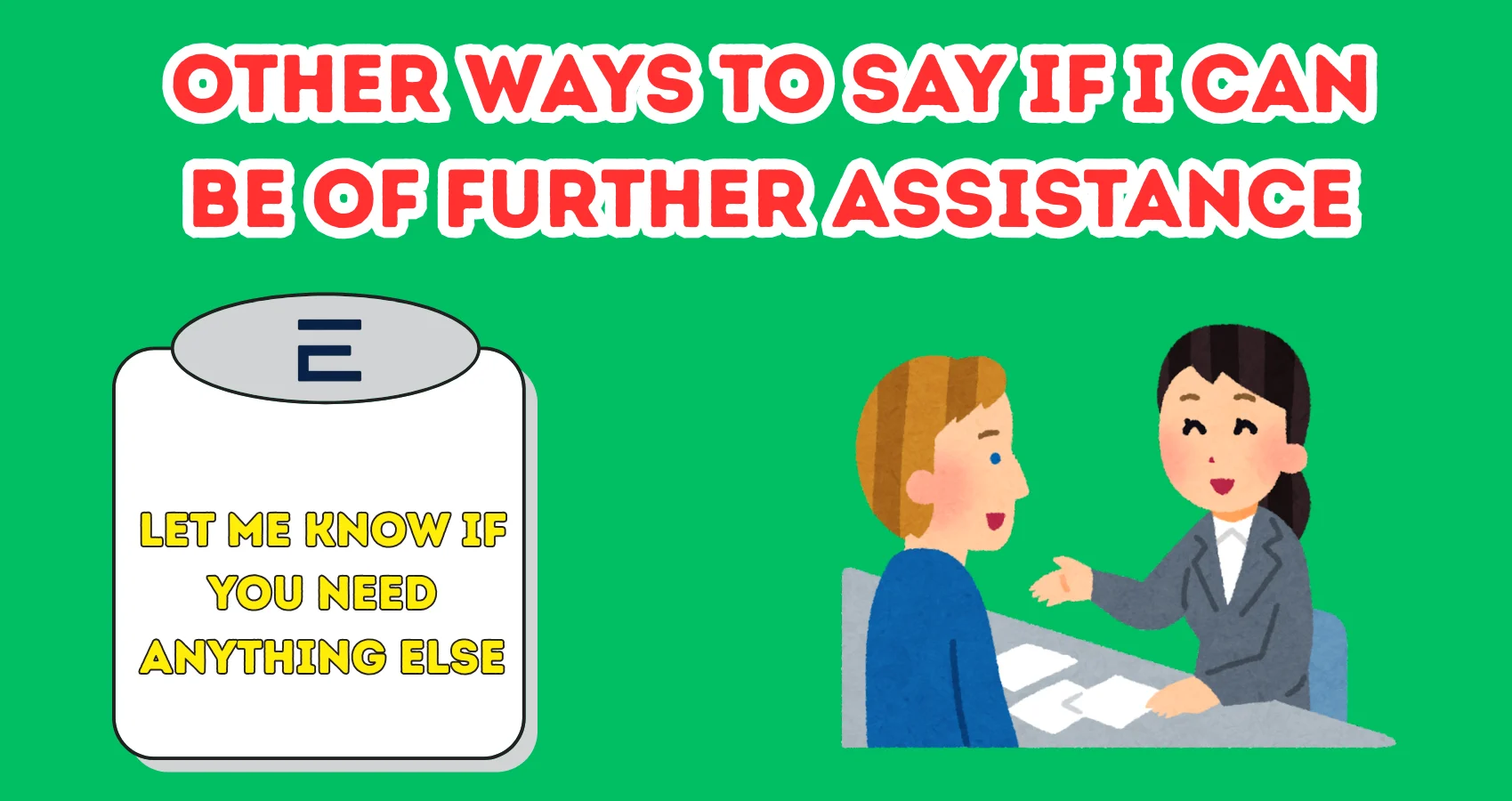
If I can be of further assistance is a polite way to offer more help. It is often used at the end of an email, letter, or professional conversation. The phrase tells the reader that you are ready to help if they need anything else.
Learning other ways to say if I can be of further assistance can make your English sound more natural and flexible. Using the same phrase in every email may feel repetitive. Different expressions can also change the tone. Some sound formal and respectful, while others feel warm and friendly.
For example, Please let me know if I can help with anything else sounds professional but natural. Just let me know if you need anything sounds more relaxed.
Knowing these alternatives to if I can be of further assistance is useful for customer service, business emails, workplace messages, academic communication, and everyday English.
What Does If I Can Be Of Further Assistance Mean?
If I can be of further assistance means if there is anything else I can do to help you.
It is a polite and formal expression. The phrase is most often used when someone has already received help, information, or a service. The speaker is offering additional support.
The key word assistance is a noun. It means help or support. The full expression is a conditional phrase because it introduces a possible situation.
For example:
- Please contact me if I can be of further assistance.
- I am happy to help if I can be of further assistance.
The phrase is closely related to if I can help further, if you need any more help, and please let me know if you need anything else.
When to Use If I Can Be Of Further Assistance
Spoken English
The phrase can be used in spoken English, especially in formal situations. However, it may sound more natural in writing.
In everyday conversation, people usually say:
Let me know if you need anything else.
Business English
This is one of the best settings for the expression. Customer service workers, managers, consultants, and business professionals may use it to offer additional support.
For example:
Please contact our team if I can be of further assistance.
Emails and Messages
The phrase is especially common at the end of professional emails. It creates a polite closing and shows that you remain available.
For example:
Please feel free to contact me if I can be of further assistance.
Social Media
It can work on professional social media platforms, but it may sound too formal for casual posts or comments.
A simpler choice is:
Let me know if you need anything else.
Academic Writing
The phrase may be used in formal communication with professors, students, researchers, or academic staff. It is more suitable in emails than in the main body of academic research.
Professional Meetings
During meetings, a shorter expression is often better. You can say:
I am happy to help with anything else you need.
This sounds professional without being overly formal.
Is If I Can Be Of Further Assistance Polite or Professional?
If I can be of further assistance is highly polite and professional.
Its tone is usually:
- Polite: It shows respect and willingness to help.
- Neutral: It does not express strong emotion.
- Formal: The word assistance gives it a formal feel.
- Soft: It offers help without putting pressure on the listener.
- Professional: It works especially well in business communication.
Better for workplace: Please let me know if I can assist with anything else.
Better for casual communication: Let me know if you need anything else.
One useful etiquette tip is to avoid making every casual message sound like a formal business letter. Choose an alternative that matches your relationship with the reader.
Pros & Cons of Using If I Can Be Of Further Assistance
✔ Pros
- Sounds polite
- Shows professionalism
- Offers additional support
- Works well in business emails
- Creates a respectful closing
- Suitable for customer service
- Communicates willingness to help
✘ Cons
- Can sound overly formal
- May feel old-fashioned in casual messages
- Is longer than simpler alternatives
- Can sound repetitive in frequent emails
- May feel distant with friends or close colleagues
Quick Alternatives to If I Can Be Of Further Assistance
- Please let me know if I can help
- Let me know if you need anything else
- I am happy to help further
- Please let me know how I can help
- I am happy to assist
- Let me know how I can assist
- Please feel free to reach out
- I am here if you need anything
- Please contact me if you need further help
- I would be happy to assist
- Do not hesitate to contact me
- Please reach out if you need anything else
- I am available to help
- Let me know if there is anything else you need
- I am glad to help
- Happy to help with anything else
- Please contact me if you need more information
- I can help with any other questions
- Let me know if I can do anything else
- Feel free to ask if you need more help
Please Let Me Know If I Can Help
Phrase: Please let me know if I can help
Meaning: A polite offer to provide additional help.
Explanation: This is one of the most natural alternatives to if I can be of further assistance. It keeps the polite tone but uses simpler words. It works well in business emails and everyday professional communication.
Grammar Note: Conditional phrase with a polite request.
Example Sentence: Please let me know if I can help with anything else.
Best Use: Email, workplace, customer service, professional communication.
Worst Use: Very casual conversations where I can help if you need me may sound more natural.
Tone: Polite, professional, warm.
Level: Beginner.
Similarity Score: 10/10
Replaceability Tip: Use this when you want a professional phrase that sounds natural and easy to understand.
Let Me Know If You Need Anything Else
Phrase: Let me know if you need anything else
Meaning: Tell me if you need more help or support.
Explanation: This is a highly natural expression. It is less formal than the original phrase but still professional enough for most workplace emails.
Grammar Note: Imperative phrase with a conditional clause.
Example Sentence: I have attached the requested files. Let me know if you need anything else.
Best Use: Emails, messages, workplace, customer service.
Worst Use: Situations requiring very formal legal language.
Tone: Friendly, polite, professional.
Level: Beginner.
Similarity Score: 10/10
Replaceability Tip: Choose this when you want to sound helpful without sounding stiff.
I Am Happy To Help Further
Phrase: I am happy to help further
Meaning: I am willing to provide more assistance.
Explanation: This expression sounds positive and welcoming. It makes your offer feel more personal than the original phrase.
Grammar Note: Adjective phrase with an infinitive.
Example Sentence: I am happy to help further if you have any questions.
Best Use: Professional emails, workplace conversations, customer service.
Worst Use: Very casual text messages.
Tone: Warm, polite, professional.
Level: Intermediate.
Similarity Score: 9/10
Replaceability Tip: Use it when you want to show genuine willingness to continue helping.
Please Let Me Know How I Can Help
Phrase: Please let me know how I can help
Meaning: Tell me what support you need.
Explanation: This phrase is excellent when you want the other person to explain what help they need. It feels open and cooperative.
Grammar Note: Polite request.
Example Sentence: Please let me know how I can help resolve this issue.
Best Use: Workplace, emails, customer service, meetings.
Worst Use: When you already know exactly what additional assistance is needed.
Tone: Polite, professional, supportive.
Level: Beginner.
Similarity Score: 9/10
Replaceability Tip: Choose this when you want to invite the reader to tell you what they need.
I Am Happy To Assist
Phrase: I am happy to assist
Meaning: I am willing and pleased to provide help.
Explanation: This is shorter than the original phrase and still sounds professional. The word assist gives it a formal business tone.
Grammar Note: Formal verb phrase.
Example Sentence: I am happy to assist with any questions you may have.
Best Use: Business emails, customer service, workplace communication.
Worst Use: Casual chats with close friends.
Tone: Professional, polite, formal.
Level: Intermediate.
Similarity Score: 9/10
Replaceability Tip: Use this when you want a concise professional alternative.
Let Me Know How I Can Assist
Phrase: Let me know how I can assist
Meaning: Tell me what help you need from me.
Explanation: This is a polished workplace expression. It sounds professional while remaining direct and easy to understand.
Grammar Note: Imperative phrase with a modal verb.
Example Sentence: Let me know how I can assist with the next stage.
Best Use: Business emails, meetings, customer support.
Worst Use: Very informal conversations.
Tone: Professional, polite, neutral.
Level: Intermediate.
Similarity Score: 9/10
Replaceability Tip: Choose this when communicating with clients, managers, or professional contacts.
Please Feel Free To Reach Out
Phrase: Please feel free to reach out
Meaning: You are welcome to contact me.
Explanation: This expression focuses on future communication. It is warm and inviting, making it useful when you want the reader to contact you later.
Grammar Note: Polite idiomatic phrase.
Example Sentence: Please feel free to reach out if you have any further questions.
Best Use: Emails, customer service, networking, workplace communication.
Worst Use: Very formal legal documents where direct wording may be preferred.
Tone: Friendly, polite, professional.
Level: Intermediate.
Similarity Score: 8/10
Replaceability Tip: Use it when the main idea is encouraging someone to contact you again.
I Am Here If You Need Anything
Phrase: I am here if you need anything
Meaning: I am available if you need help.
Explanation: This sounds warmer and more personal. It is a good choice when you want to show availability without using formal business language.
Grammar Note: Conditional phrase.
Example Sentence: I am here if you need anything while you finish the project.
Best Use: Workplace, friendly communication, messages.
Worst Use: Very formal corporate letters.
Tone: Warm, supportive, friendly.
Level: Beginner.
Similarity Score: 8/10
Replaceability Tip: Choose this when warmth matters more than formality.
Please Contact Me If You Need Further Help
Phrase: Please contact me if you need further help
Meaning: Contact me if you require additional support.
Explanation: This is very close to the original. It keeps the professional tone but uses the simpler word help instead of assistance.
Grammar Note: Formal conditional phrase.
Example Sentence: Please contact me if you need further help with the application.
Best Use: Business emails, customer service, official communication.
Worst Use: Casual conversations.
Tone: Formal, polite, professional.
Level: Intermediate.
Similarity Score: 10/10
Replaceability Tip: Use it when you want to keep the formal structure but make the wording easier.
I Would Be Happy To Assist
Phrase: I would be happy to assist
Meaning: I would gladly provide help.
Explanation: The use of would makes this sound courteous and professional. It is especially useful when making a polite offer to a client or colleague.
Grammar Note: Conditional polite offer.
Example Sentence: I would be happy to assist with any additional questions.
Best Use: Business emails, customer service, professional communication.
Worst Use: Very casual text messages.
Tone: Formal, courteous, professional.
Level: Intermediate.
Similarity Score: 9/10
Replaceability Tip: Choose this when you want to make your offer sound especially respectful.
Do Not Hesitate To Contact Me
Phrase: Do not hesitate to contact me
Meaning: Please contact me whenever you need help.
Explanation: This is a classic professional closing. It strongly encourages the reader to get in touch without worrying about bothering you.
Grammar Note: Negative imperative with an infinitive.
Example Sentence: Do not hesitate to contact me if you require additional information.
Best Use: Formal emails, business letters, customer service.
Worst Use: Casual social media conversations.
Tone: Formal, polite, professional.
Level: Intermediate.
Similarity Score: 9/10
Replaceability Tip: Use this when you want to make your availability clear in a formal setting.
Please Reach Out If You Need Anything Else
Phrase: Please reach out if you need anything else
Meaning: Contact me if you need more help.
Explanation: This is a modern professional alternative. It is common in workplace communication and sounds friendlier than some traditional formal expressions.
Grammar Note: Polite phrasal expression.
Example Sentence: Please reach out if you need anything else before the meeting.
Best Use: Emails, workplace, customer communication.
Worst Use: Highly formal academic or legal writing where contact may be more direct.
Tone: Friendly, professional, polite.
Level: Intermediate.
Similarity Score: 10/10
Replaceability Tip: Choose this for modern business communication where you want to sound approachable.
I Am Available To Help
Phrase: I am available to help
Meaning: I am ready and able to provide assistance.
Explanation: This is direct and professional. It focuses on your availability rather than the reader’s need.
Grammar Note: Adjective phrase with infinitive.
Example Sentence: I am available to help if any issues arise.
Best Use: Workplace, business emails, professional messages.
Worst Use: Friendly conversations where it may sound slightly formal.
Tone: Neutral, professional, helpful.
Level: Beginner.
Similarity Score: 9/10
Replaceability Tip: Use this when you want to clearly show that you are available.
I Am Glad To Help
Phrase: I am glad to help
Meaning: I am pleased to provide help.
Explanation: This sounds warmer than the original phrase. It can be used after helping someone and shows a positive attitude.
Grammar Note: Adjective phrase with infinitive.
Example Sentence: I am glad to help if you have more questions.
Best Use: Workplace, customer service, friendly professional conversations.
Worst Use: Extremely formal documents.
Tone: Friendly, warm, polite.
Level: Beginner.
Similarity Score: 8/10
Replaceability Tip: Choose this when you want your offer to feel sincere and welcoming.
Happy To Help With Anything Else
Phrase: Happy to help with anything else
Meaning: I am willing to provide more help.
Explanation: This is a shorter, modern expression. It works especially well in email and workplace communication.
Grammar Note: Elliptical adjective phrase.
Example Sentence: Thanks for reaching out. Happy to help with anything else you need.
Best Use: Emails, chats, workplace messages.
Worst Use: Formal legal correspondence.
Tone: Friendly, professional, warm.
Level: Intermediate.
Similarity Score: 9/10
Replaceability Tip: Use this when you want professional language that does not feel overly formal.
Please Contact Me If You Need More Information
Phrase: Please contact me if you need more information
Meaning: Contact me if you require additional details.
Explanation: This alternative is ideal when your current message provides information and you want to offer more details if needed.
Grammar Note: Polite conditional phrase.
Example Sentence: Please contact me if you need more information about the registration process.
Best Use: Business emails, academic communication, customer service.
Worst Use: When the reader needs action rather than information.
Tone: Formal, polite, professional.
Level: Beginner.
Similarity Score: 8/10
Replaceability Tip: Choose this when the possible follow-up is mainly about information.
I Can Help With Any Other Questions
Phrase: I can help with any other questions
Meaning: I am available to answer additional questions.
Explanation: This is clear and useful when your main role is answering questions. It sounds less formal than if I can be of further assistance.
Grammar Note: Modal verb phrase.
Example Sentence: I hope this answers your main concerns. I can help with any other questions.
Best Use: Customer service, emails, workplace communication.
Worst Use: When the person needs practical assistance rather than answers.
Tone: Friendly, professional, neutral.
Level: Beginner.
Similarity Score: 8/10
Replaceability Tip: Use this when the likely follow-up involves questions.
Let Me Know If I Can Do Anything Else
Phrase: Let me know if I can do anything else
Meaning: Tell me if there is another action I can take to help.
Explanation: This is natural and flexible. It works well when you have already completed a task but remain available for more work.
Grammar Note: Conditional phrase.
Example Sentence: The report has been updated. Let me know if I can do anything else.
Best Use: Workplace, emails, messages.
Worst Use: Very formal legal writing.
Tone: Friendly, polite, professional.
Level: Beginner.
Similarity Score: 10/10
Replaceability Tip: Choose this when you want a natural replacement that works in many situations.
Feel Free To Ask If You Need More Help
Phrase: Feel free to ask if you need more help
Meaning: You are welcome to ask for additional support.
Explanation: This is a soft and friendly way to offer help. It removes pressure from the reader and makes future questions feel welcome.
Grammar Note: Idiomatic phrase with a conditional clause.
Example Sentence: Feel free to ask if you need more help with the assignment.
Best Use: Education, workplace, emails, friendly communication.
Worst Use: Urgent professional situations where a direct instruction is needed.
Tone: Soft, friendly, encouraging.
Level: Beginner.
Similarity Score: 9/10
Replaceability Tip: Use this when you want to create a welcoming and supportive tone.
Mini Dialogue Examples
Formal Dialogue
Client: Thank you for explaining the new process.
Consultant: You are very welcome. Please let me know if I can assist with anything else.
Client: I appreciate that. I will contact you if I have any further questions.
Informal Dialogue
Friend: Thanks for helping me fix this problem.
Friend: No worries. Let me know if you need anything else.
Friend: I will. Thanks again!
Business Email Style
Subject: Updated Documents
Dear Mr. Ahmed,
Thank you for your message. I have attached the updated documents for your review.
Please let me know if you need anything else or if I can provide any additional information.
Best regards,
James
Mistakes to Avoid
- Using the phrase in every email: Repetition can make your writing sound formulaic.
- Using assistance in very casual conversations: Help is often more natural with friends.
- Making the phrase too long: A short sentence can communicate the same idea more clearly.
- Confusing help with information: If you are only offering more details, say Please contact me if you need more information.
- Using formal language with close friends: Do not hesitate to contact me may sound strangely official in a casual text.
- Forgetting the purpose of the offer: Choose a phrase that matches whether you are offering information, action, or general support.
- Sounding unavailable while offering help: Avoid phrases that make your offer seem reluctant or forced.
Cultural & Tone Tips
Native English speakers usually understand if I can be of further assistance as a formal and courteous expression. It often sounds like customer service or business language.
In UK English, formal phrases such as if I can be of further assistance and do not hesitate to contact me are familiar in professional letters and emails. They may sound traditional but remain polite.
In US English, shorter phrases such as let me know if you need anything else are very common. They often sound more natural in modern workplace communication.
In casual social English, people usually avoid the formal word assistance. They are more likely to say let me know if you need anything, I am here if you need me, or happy to help.
The most important rule is to match your words to the relationship. A client may appreciate formal politeness. A friend usually prefers simple and warm language.
Comparison Table
| Phrase | Tone | Best Context | Professional Level | Example |
|---|---|---|---|---|
| Please let me know if I can help | Polite | Emails | High | Please let me know if I can help. |
| Let me know if you need anything else | Friendly | Workplace | High | Let me know if you need anything else. |
| I am happy to assist | Formal | Business | Very high | I am happy to assist with your request. |
| Please feel free to reach out | Warm | Emails | High | Please feel free to reach out with questions. |
| Do not hesitate to contact me | Formal | Business letters | Very high | Do not hesitate to contact me if needed. |
| I am here if you need anything | Warm | Messages | Medium | I am here if you need anything. |
| Let me know how I can assist | Professional | Workplace | Very high | Let me know how I can assist. |
FAQs
Is If I Can Be Of Further Assistance Polite?
Yes. If I can be of further assistance is very polite. It is also formal and professional, which makes it suitable for business emails, customer service, and official communication.
Is It Okay To Use If I Can Be Of Further Assistance In Emails?
Yes. It is especially suitable for professional emails. However, shorter alternatives such as Please let me know if I can help often sound more natural in modern business writing.
What Is The Most Formal Alternative?
I would be happy to assist and Do not hesitate to contact me are highly professional choices. Please let me know if I can assist further is also very formal.
What Is The Most Polite Alternative?
Please let me know if I can help is a strong choice. It is respectful, simple, and warm without sounding overly formal.
What Should Beginners Use?
Beginners should use Let me know if you need anything else or Please let me know if I can help. Both are easy to understand and work in many situations.
Is Assistance More Formal Than Help?
Yes. Assistance generally sounds more formal than help. Use assistance in professional or official communication when appropriate. Use help for everyday English and friendly conversations.
Conclusion:
Learning other ways to say if I can be of further assistance helps you communicate with more confidence and flexibility. The original phrase is polite and professional, but it can sound formal in everyday situations. Alternatives such as Please let me know if I can help, Let me know if you need anything else, and I am happy to assist allow you to match your language to the situation.
Good English is not only about correct grammar. It is also about choosing the right tone. Practice these alternatives to if I can be of further assistance in emails, meetings, customer service conversations, and daily messages. With regular practice, your communication will sound more natural, clear, and professional.

I’m John Mark, the creator of EnglishGrammarline. I share simple and meaningful insights into dreams, their symbols, and possible interpretations. My goal is to help readers understand their dreams in an easy and interesting way.