
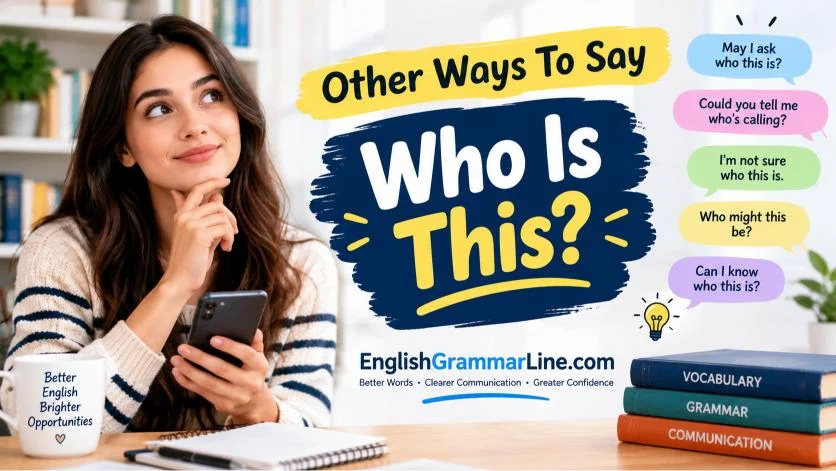
Who is this? is a short question used when you do not know who is calling, messaging, or speaking to you. It is common in phone calls, texts, emails, and everyday conversations. However, the phrase can sometimes sound direct or slightly abrupt, especially in professional situations.
Knowing other ways to say who is this helps you choose words that match the situation. A polite expression can make a conversation feel warmer, while a professional version can make a business message sound more respectful.
For example, Who is this? is casual and direct. May I ask who is calling? sounds more polite and professional.
Using different expressions also improves your English fluency. You can choose a natural phrase for a friend, customer, colleague, stranger, or business contact. The following synonyms for who is this and alternatives to who is this will help you communicate clearly and confidently.
What Does Who Is This Mean?
Who is this? means Who are you? or May I know who is speaking or contacting me?
The phrase is usually used when the speaker does not recognize the person on the other end of a conversation.
It is a question phrase made with the question word who, the verb is, and the pronoun this.
For example:
- Who is this calling me?
- Hi, I missed your call. Who is this?
The phrase is not normally rude, but its tone depends heavily on how it is said. A friendly voice can make it sound perfectly normal. A sharp tone can make it sound suspicious or unfriendly.
Some related expressions include:
- Who are you?
- May I ask who is calling?
- Could I ask who this is?
- May I know who I am speaking with?
- Can I ask who this is?
When to Use Who Is This?
Spoken English
Who is this? is very common in everyday spoken English. You may use it when you answer an unknown phone number or when someone approaches you without introducing themselves.
For example:
Hello, who is this?
It is short and easy to understand.
Business English
In business communication, a more polite expression is usually better.
Instead of:
Who is this?
you can say:
May I ask who is calling?
This sounds more respectful when speaking with a customer, client, manager, or business contact.
Emails and Messages
If someone sends you a message from an unfamiliar number, Who is this? is common in casual communication.
For professional messages, try:
May I ask who I am speaking with?
This keeps the conversation polite and professional.
Social Media
On social media, people often use casual expressions.
For example:
Hey, who is this?
or
Hi, have we met before?
A formal expression may sound unusual in a casual social media conversation.
Academic Writing
Who is this? is generally not suitable for academic writing. Academic writing normally requires more formal and specific language.
Instead, describe the person directly or use formal wording such as Who is the individual being referred to? when appropriate.
Professional Meetings
During a professional meeting, you may need to identify an unfamiliar speaker.
Instead of asking:
Who is this?
you can say:
Could you please introduce yourself?
This sounds much more respectful and appropriate in a professional environment.
Is Who Is This Polite or Professional?
Who is this? is usually neutral to casual.
It is not automatically rude. However, the phrase can sound blunt if you use it with someone who expects formal communication.
Polite
Could I ask who this is?
This sounds respectful and friendly.
Neutral
Who is this?
This is direct and common.
Strong
Who are you?
This can sound demanding or suspicious.
Soft
May I ask who I am speaking with?
This sounds gentle and professional.
Formal
May I ask whom I have the pleasure of speaking with?
This is very formal and may sound old-fashioned in everyday American English.
Informal
Hey, who is this?
This works well with casual messages.
Better for workplace: May I ask who is calling?
Avoid in corporate emails: Who is this? when you can use a more respectful alternative.
Pros & Cons of Using Who Is This?
✔ Pros
- Very easy to understand
- Common in everyday English
- Short and direct
- Useful for unknown callers
- Natural in casual conversations
- Easy for beginners
✘ Cons
- Can sound blunt
- May sound suspicious
- Not ideal for formal business situations
- Can feel unfriendly in written messages
- May sound demanding if used with the wrong tone
Quick Alternatives to Who Is This?
- May I ask who is calling?
- Could I ask who this is?
- Who am I speaking with?
- May I know who is calling?
- Can I ask who this is?
- Could you please introduce yourself?
- May I ask who I am speaking with?
- Who is speaking, please?
- Could you tell me who is calling?
- May I know your name?
- Who do I have the pleasure of speaking with?
- Could you remind me who you are?
- Have we met before?
- Could you please identify yourself?
- Can I know who I’m speaking to?
- Who might this be?
- May I ask your name?
- Can you tell me who this is?
- Sorry, who is this?
- Hi, may I ask who this is?
May I Ask Who Is Calling?
Phrase: May I ask who is calling?
Meaning: A polite way to ask for the identity of a person on the phone.
Explanation: This is one of the best professional alternatives to who is this. It sounds courteous and works especially well when answering a business call.
Grammar Note: Polite question using a modal verb.
Example Sentence: Good morning. May I ask who is calling?
Best Use: Business calls, workplaces, customer service, formal conversations.
Worst Use: Casual chats with close friends.
Tone: Formal, polite, professional.
Level: Intermediate.
Similarity Score: 10/10
Replaceability Tip: Use this instead of who is this when you want to sound respectful on the phone.
Could I Ask Who This Is?
Phrase: Could I ask who this is?
Meaning: A polite way to ask someone to identify themselves.
Explanation: This sounds softer than the direct question who is this. It is useful when you do not recognize a caller or sender.
Grammar Note: Polite question.
Example Sentence: Sorry, could I ask who this is?
Best Use: Phone calls, messages, workplace conversations.
Worst Use: Very casual situations where a shorter phrase would be more natural.
Tone: Polite, neutral, soft.
Level: Beginner.
Similarity Score: 10/10
Replaceability Tip: Choose this when you want to keep the meaning but make your question friendlier.
Who Am I Speaking With?
Phrase: Who am I speaking with?
Meaning: A polite way to ask for someone’s identity during a conversation.
Explanation: This expression is common in professional phone calls. It focuses on the person you are currently speaking with rather than simply asking who they are.
Grammar Note: WH-question.
Example Sentence: I’m sorry, who am I speaking with?
Best Use: Phone calls, customer service, business communication.
Worst Use: Formal written documents where the person’s identity should already be known.
Tone: Polite, professional, neutral.
Level: Intermediate.
Similarity Score: 10/10
Replaceability Tip: Use this when you want a natural professional question during a call.
May I Know Who Is Calling?
Phrase: May I know who is calling?
Meaning: A formal way to ask for the caller’s identity.
Explanation: This is especially common in professional and service settings. It clearly communicates that you want the person’s name or identity before continuing.
Grammar Note: Modal verb question.
Example Sentence: May I know who is calling, please?
Best Use: Business calls, reception desks, customer service.
Worst Use: Casual conversations with friends.
Tone: Formal, polite, professional.
Level: Intermediate.
Similarity Score: 10/10
Replaceability Tip: Choose this when you need a courteous workplace expression.
Can I Ask Who This Is?
Phrase: Can I ask who this is?
Meaning: A polite but simple way to ask who someone is.
Explanation: This expression is less formal than may I ask but still sounds more courteous than who is this?
Grammar Note: Modal question.
Example Sentence: Hi, can I ask who this is?
Best Use: Messages, phone calls, everyday conversations.
Worst Use: Highly formal business situations.
Tone: Friendly, neutral, polite.
Level: Beginner.
Similarity Score: 10/10
Replaceability Tip: Use this when you want something natural without sounding overly formal.
Could You Please Introduce Yourself?
Phrase: Could you please introduce yourself?
Meaning: A polite request for someone to say who they are.
Explanation: This is useful when you meet someone for the first time or when a person joins a professional conversation without introducing themselves.
Grammar Note: Polite request.
Example Sentence: Before we begin, could you please introduce yourself?
Best Use: Meetings, interviews, classrooms, professional events.
Worst Use: Answering a casual phone call from a friend.
Tone: Formal, professional, respectful.
Level: Intermediate.
Similarity Score: 8/10
Replaceability Tip: Use this when the person has not introduced themselves rather than when you simply do not recognize a caller.
Who Is Speaking, Please?
Phrase: Who is speaking, please?
Meaning: A polite way to ask who is on the phone.
Explanation: This phrase is simple and clear. It sounds more polite than the direct question and has a traditional telephone style.
Grammar Note: Polite question.
Example Sentence: Hello, who is speaking, please?
Best Use: Phone calls, reception, formal conversations.
Worst Use: Casual text messages.
Tone: Polite, formal, neutral.
Level: Beginner.
Similarity Score: 10/10
Replaceability Tip: Use it when answering an unfamiliar phone call.
Could You Tell Me Who Is Calling?
Phrase: Could you tell me who is calling?
Meaning: A polite request for the caller’s identity.
Explanation: This sounds courteous and professional. It is useful when speaking on behalf of a company or organization.
Grammar Note: Polite request.
Example Sentence: Could you tell me who is calling before I transfer you?
Best Use: Reception, offices, customer service, business calls.
Worst Use: Casual conversations.
Tone: Professional, polite, neutral.
Level: Intermediate.
Similarity Score: 10/10
Replaceability Tip: Choose this when you want a clear workplace expression.
May I Ask Who I Am Speaking With?
Phrase: May I ask who I am speaking with?
Meaning: A respectful way to ask for someone’s identity.
Explanation: This is a strong professional choice. It sounds courteous without being overly complicated.
Grammar Note: Formal question.
Example Sentence: Good afternoon. May I ask who I am speaking with?
Best Use: Business calls, customer service, formal conversations.
Worst Use: Casual messages between friends.
Tone: Formal, respectful, professional.
Level: Intermediate.
Similarity Score: 10/10
Replaceability Tip: Use it when speaking to a customer, client, or unfamiliar professional contact.
Who Do I Have the Pleasure of Speaking With?
Phrase: Who do I have the pleasure of speaking with?
Meaning: A very polite and formal way to ask someone’s identity.
Explanation: This expression adds warmth and courtesy. It can sound elegant, but it may be too formal for everyday conversations.
Grammar Note: Idiomatic formal question.
Example Sentence: Good afternoon. Who do I have the pleasure of speaking with?
Best Use: Formal calls, customer service, traditional professional settings.
Worst Use: Casual texting.
Tone: Very formal, courteous, warm.
Level: Advanced.
Similarity Score: 9/10
Replaceability Tip: Use this when you want a highly courteous tone.
May I Know Your Name?
Phrase: May I know your name?
Meaning: A polite way to ask someone for their name.
Explanation: This is simple and easy to understand. It works when you do not know the person’s name, although What is your name? is more common in many everyday situations.
Grammar Note: Modal question.
Example Sentence: May I know your name, please?
Best Use: Formal conversations, customer service, introductions.
Worst Use: When you only need to identify a caller and do not necessarily need their name.
Tone: Polite, formal, respectful.
Level: Beginner.
Similarity Score: 8/10
Replaceability Tip: Choose this when asking specifically for someone’s name.
Who Might This Be?
Phrase: Who might this be?
Meaning: A softer way to ask who someone is.
Explanation: This expression can sound polite and slightly indirect. It is useful when you want to avoid sounding blunt.
Grammar Note: Modal verb question.
Example Sentence: I’m sorry, who might this be?
Best Use: Phone calls, unfamiliar contacts, polite conversations.
Worst Use: Very formal corporate communication.
Tone: Soft, polite, neutral.
Level: Intermediate.
Similarity Score: 9/10
Replaceability Tip: Use it when you want to sound less direct than who is this?
Have We Met Before?
Phrase: Have we met before?
Meaning: A question asking whether you have previously met someone.
Explanation: This is useful when someone looks familiar but you cannot remember them. It is not a direct synonym for who is this, but it can serve the same purpose in face-to-face situations.
Grammar Note: Present perfect question.
Example Sentence: You look familiar. Have we met before?
Best Use: Social situations, networking, face-to-face conversations.
Worst Use: Telephone conversations where the person is completely unknown.
Tone: Friendly, natural, curious.
Level: Beginner.
Similarity Score: 6/10
Replaceability Tip: Use this when you think you may already know the person.
Could You Please Identify Yourself?
Phrase: Could you please identify yourself?
Meaning: A formal request for someone to state who they are.
Explanation: This expression is much more formal and direct. It may sound appropriate in official situations but can feel cold in ordinary conversation.
Grammar Note: Formal request.
Example Sentence: Before we grant access, could you please identify yourself?
Best Use: Security, official procedures, formal situations.
Worst Use: Friendly conversations.
Tone: Formal, serious, authoritative.
Level: Advanced.
Similarity Score: 8/10
Replaceability Tip: Use this only when identification is important or required.
Can I Know Who I’m Speaking To?
Phrase: Can I know who I’m speaking to?
Meaning: A casual way to ask for someone’s identity.
Explanation: This phrase is understandable and commonly heard in some varieties of English. In polished professional English, Can I ask who I’m speaking with? often sounds more natural.
Grammar Note: Question with modal verb.
Example Sentence: Sorry, can I know who I’m speaking to?
Best Use: Everyday conversations and phone calls.
Worst Use: Very formal business writing.
Tone: Neutral, polite.
Level: Beginner.
Similarity Score: 9/10
Replaceability Tip: Use it for simple everyday communication, but consider a more polished alternative in formal settings.
Sorry, Who Is This?
Phrase: Sorry, who is this?
Meaning: A softened version of the direct question.
Explanation: Adding sorry makes the question feel less abrupt. This is especially natural when answering an unfamiliar call.
Grammar Note: Politeness marker plus question.
Example Sentence: Sorry, who is this? I don’t have this number saved.
Best Use: Phone calls, texts, casual conversations.
Worst Use: Formal corporate correspondence.
Tone: Friendly, neutral, slightly soft.
Level: Beginner.
Similarity Score: 10/10
Replaceability Tip: Use this when you want to keep the original wording but make it sound friendlier.
Hi, May I Ask Who This Is?
Phrase: Hi, may I ask who this is?
Meaning: A friendly and polite way to ask someone’s identity.
Explanation: The greeting makes the question warmer, while may I ask adds politeness.
Grammar Note: Greeting plus polite question.
Example Sentence: Hi, may I ask who this is? I received a message from this number.
Best Use: Messages, phone calls, unfamiliar contacts.
Worst Use: Very casual conversations where you already know the person.
Tone: Friendly, polite, professional.
Level: Intermediate.
Similarity Score: 10/10
Replaceability Tip: This is a useful all-purpose option when you want to sound respectful without being too formal.
Mini Dialogue Examples
Formal Dialogue
Receptionist: Good morning. How may I help you?
Caller: I would like to speak with Mr. Adams.
Receptionist: Certainly. May I ask who is calling?
Caller: This is Daniel from Greenfield Solutions.
Informal Dialogue
Unknown Number: Hey, are you free to talk?
You: Hi. Sorry, who is this?
Unknown Number: It’s Mike. We met at Sarah’s party.
You: Oh, Mike! I remember you now.
Business Email-Style Example
Subject: Re: Your Message
Hello,
Thank you for contacting me. I do not believe I have your contact details saved. May I ask who I am speaking with and which company you represent?
Best regards,
James
Mistakes to Avoid
- Using Who are you? with strangers: This can sound much more aggressive than Who is this?
- Using Who is this? in every situation: Professional conversations often need softer wording.
- Forgetting the context: A friend and a customer should not always receive the same expression.
- Using very formal language with close friends: Expressions such as Who do I have the pleasure of speaking with? can sound unnatural in casual chats.
- Confusing identity with a name: Who is this? asks about identity, while What is your name? specifically asks for a name.
- Sounding suspicious without meaning to: A short written Who is this? can seem unfriendly because the reader cannot hear your voice.
- Using Identify yourself casually: This can sound serious or authoritative.
Cultural & Tone Tips
Native speakers usually understand who is this? as a normal question when someone does not recognize a caller or contact. However, written messages can make the phrase seem sharper because there is no voice tone.
In US English, Who is this?, Who am I speaking with?, and Can I ask who this is? are common choices. Who am I speaking with? works especially well in professional calls.
In UK English, Who is speaking, please? and May I ask who is calling? can sound natural in more formal telephone situations. Who is this? is still perfectly understandable and common.
In casual social English, people often soften the question with words such as hey, sorry, or hi:
Hey, who is this?
Sorry, who is this?
Hi, may I ask who this is?
Your tone also matters. Saying Who is this? with a friendly voice can sound completely normal. Saying it sharply can make the listener feel unwelcome.
When in doubt, use a softer expression such as Could I ask who this is?
Comparison Table
| Phrase | Tone | Best Context | Professional Level | Example |
|---|---|---|---|---|
| Who is this? | Direct | Casual calls | Medium | Who is this? |
| May I ask who is calling? | Formal | Business calls | Very High | May I ask who is calling? |
| Could I ask who this is? | Polite | Calls and messages | High | Could I ask who this is? |
| Who am I speaking with? | Professional | Phone calls | Very High | Who am I speaking with? |
| Can I ask who this is? | Friendly | Everyday English | Medium | Can I ask who this is? |
| Could you please introduce yourself? | Formal | Meetings | Very High | Could you please introduce yourself? |
| Sorry, who is this? | Soft | Casual calls | Medium | Sorry, who is this? |
FAQs
Is Who Is This Rude?
No, who is this? is not automatically rude. It is a normal English question. However, it can sound blunt depending on your tone or the situation. A softer option is Could I ask who this is?
Is Who Is This Okay in Emails?
It can be used in casual messages, especially when replying to an unknown contact. In professional emails, May I ask who I am speaking with? sounds more polished.
What Is the Most Formal Alternative to Who Is This?
May I ask who I am speaking with? is one of the best formal choices. Who do I have the pleasure of speaking with? is even more courteous but can sound very formal.
What Is the Most Polite Alternative to Who Is This?
Could I ask who this is? is a simple and polite choice. May I ask who is calling? is excellent for professional phone conversations.
What Should Beginners Use Instead of Who Is This?
Beginners can use Can I ask who this is?, Sorry, who is this?, or Who am I speaking with? These expressions are easy to understand and useful in real conversations.
What Is a Professional Way to Ask Who Someone Is?
Try May I ask who I am speaking with? or Could you please introduce yourself? These expressions are respectful and work well in business settings.
Conclusion:
Learning other ways to say who is this gives you more control over your tone and helps you communicate naturally in different situations. Who is this? is perfectly normal for casual conversations, but professional situations often call for softer expressions such as Could I ask who this is? or May I ask who is calling?
Using the right alternative can make you sound more polite, confident, and respectful. Choose simple expressions with friends, professional phrases at work, and softer wording when contacting strangers. Practice these synonyms for who is this in real conversations, phone calls, and messages. With regular practice, you will become more comfortable choosing the right expression for every situation

I’m John Mark, the creator of EnglishGrammarline. I share simple and meaningful insights into dreams, their symbols, and possible interpretations. My goal is to help readers understand their dreams in an easy and interesting way.